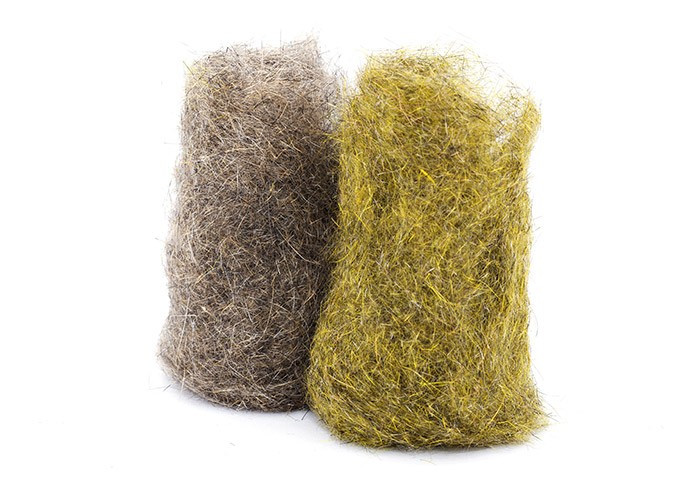
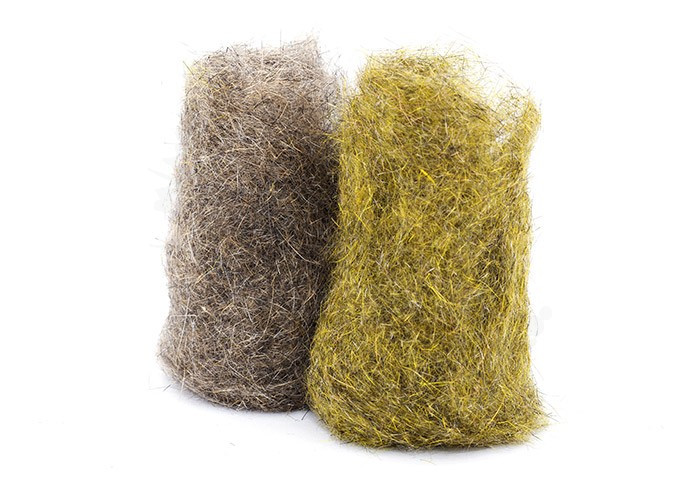
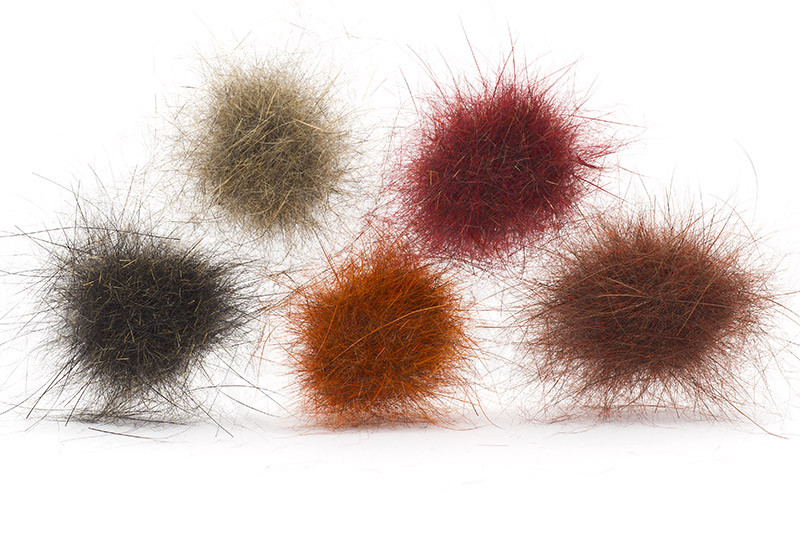
Trout Line Squirrel Hybrid Dubbing is a proven, best-selling blend developed to give fly tiers one material that can do “almost everything” — from slim nymph bodies to buggy thoraxes — while still looking natural and alive in the water. By combining approximately 75% squirrel with around 25% Transylvanian hare,we created a distinctive “salt & pepper” effect: subtle contrast, depth, and micro-shades that mimic real aquatic insects.
Why this dubbing works so well in the water
Natural translucency and depth: squirrel fibers bring a slightly silky, lively look; hare adds matte, buggy texture. Together they produce a body that looks clean yet natural, not flat.
High “bugginess” without bulk: the blend gives movement and texture while still allowing thin bodies on small hooks.
Salt & pepper contrast: mixing dyed fibers with a portion of natural squirrel creates soft highlights and darker points, helping the fly read as “alive” under changing light and in different water clarities.
Where it excels
This is a true all-round dubbing, especially strong for:
Medium and small nymphs (slim bodies, collars, full thoraxes)
Emergers (natural buggy profile, great for transitional stages)
Wet flies (soft movement and a natural sheen)
Dry flies (thorax dubbing for duns, CDC dries, and technical patterns)
Easy to use, consistent results
Squirrel Hybrid Dubbing dubs onto the thread quickly and cleanly, so you can build anything from a tight, smooth noodle to a spiky thorax depending on your technique (tight twist for slim bodies, looser dubbing loop / lighter tension for more “legs” and texture).
How we make it (quality process)
To keep the material consistent and premium, every batch is prepared with attention to detail:
Fibers are hand-cut with fine scissors for control and uniformity
Only tanned skins are used (clean, stable fibers)
Fibers are washed in hot water (approx. 80–90°C) before blending, for a very clean and bright dubbing
We air-dry carefully and use an air-mixing process to preserve the natural structure and avoid “crushed” fibers
Dyeing and final mixing are done at the end to lock in the intended shade balance and the salt & pepper look
The result
A dubbing that ties easily, fishes naturally, and delivers a fly that looks attractive, buggy, and realistic at the same time — a blend we rely on for nymphs and emergers, and also for thoraxes on many dry fly styles.
Customer Reviews
9 Item(s)
- La texture è perfetta, mi piace molto! Review by Fabrizio
Un materiale eccellente, con una texture perfetta per qualsiasi ninfa tu voglia realizzare. (Posted on 5/19/2026)Rating - Fantastic dubbing Review by Mika
Super nice dubbing with perfect balance between spikiness and softness. The brown shades are top class, never used such nice dubbing before. I wonder how is mad rabbit dubbing? (Posted on 3/21/2026)Rating - Beautiful colours Review by Dave
Excellent colours and mix. I love your dubbing :). You have a magic hand! (Posted on 3/8/2026)Rating - Best dubbing ever used Review by Emmanuel
This is absolutely the best dubbing I ever used. Just incredible stuff to work with. Definitely a must have ! (Posted on 3/14/2025)Rating - Amazing dubbing! Review by Kyle Cheshire
Fantastic product, genius combination of Hare and Squirrel. Easy to dub and great for dubbing loop and split thread techniques, I use this dubbing on 90% of my dry flies and also on a lot of nymphs. The black pepper and natural colours are my favourites. (Posted on 5/19/2022)Rating - Nice combination Review by Julien
This combination between hare and squirrel is a winner. practically you don't need other dubbing for river flies!Rating
Thanks for this great product! (Posted on 2/7/2017)- Very nice dubbing Review by Nick
Hi guys,Rating
I received the dubbing. I can say that I'm really impressed with the quality of your products. This dubbing is brilliant, is exactly what I need for my nymphs!
Thanks for your excellent service!
BR
Nick (Posted on 1/3/2017)- Small buggy thorax Review by Gillard
Great for small nymphs,,thorax area behind bead.dubs easy.colour mixes are lovely. (Posted on 12/26/2016)Rating - beautiful dubbing Review by Adam
This is the great mixed dubbing that I used in the last years. I really like the texture and the synthetic fibers mixed into it. Perfect job! (Posted on 11/29/2016)Rating
9 Item(s)